
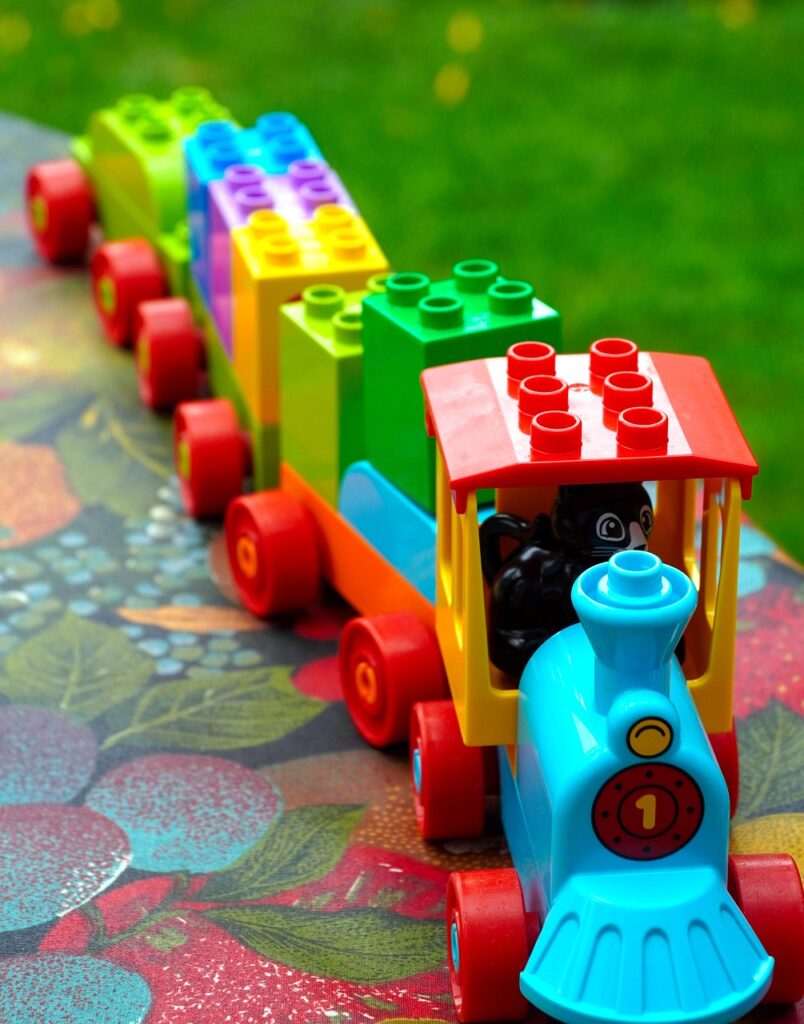
If you’ve spent any time parenting an autistic child, you’ve probably seen it — the deep, unwavering love for one specific thing.
For some kids it’s dinosaurs. For others it’s weather, maps, ceiling fans… or trains.
If your child talks about trains all day, lines up train cars perfectly, memorizes train routes, or wants to watch the same train video over and over, you are not alone.
And instead of fighting it, what if we leaned into it?
(Disclosure: This post may contain affiliate links. As an Amazon Associate, I earn from qualifying purchases — at no extra cost to you.)
Why Autistic Kids Get Focused on One Thing (Like Trains)
These aren’t just “obsessions.”
In autism, they’re called special interests — and they serve an important purpose.
Some of the links in this post are affiliate links, which means I may earn a small commission if you decide to purchase — at no extra cost to you.
1. Special Interests Provide Comfort and Predictability
The world can feel overwhelming for autistic children.
Loud environments.
Unexpected changes.
Social pressure.
Trains are different.
They follow tracks.
They run on schedules.
They have order and structure.
That predictability is calming.
For many kids, something like a Tiny Land Wooden Train Set offers a safe, controlled world they can understand and manage.
2. Repetition Regulates the Nervous System
Watching the same train video.
Building the same track layout.
Talking about the same locomotive.
Repetition isn’t stubbornness — it’s regulation.
A simple Brio World Deluxe Railway Set can provide hours of repetitive, calming play that helps organize thoughts and ease anxiety.
For many autistic kids, repetition equals peace.
3. Deep Focus Builds Confidence
Autistic children often dive deep into their interests.
They memorize train names.
They learn about steam vs. diesel engines.
They understand railway systems in incredible detail.
Books like The Great Book of Train Facts can support that curiosity while building reading skills.
When they master something, it builds confidence — especially in a world that often feels socially confusing.
4. Trains Make Logical Sense
Trains operate on systems.
Clear cause and effect.
Clear direction.
Clear rules.
For kids who struggle with unpredictable social interactions, trains offer structure.
Even watching educational content like Thomas & Friends can reinforce themes of teamwork, problem-solving, and sequencing in a format that feels safe.
5. Special Interests Can Be Used as Learning Tools
Instead of trying to reduce a train fixation, we can use it to teach:
Math (counting train cars)
Reading (train-themed books)
Social skills (pretend conductor play)
Executive functioning (following a train schedule)
A simple printable train schedule or a toy like the Melissa & Doug Wooden Train Cars Set can turn a passion into purposeful learning.
Special interests are not weaknesses.
They’re bridges.
5 Indoor Train Activities for Autistic Kids To Do At Home
If trains are the current love in your home, here are practical ways to lean into it.
1. Build a Living Room Train World
Use:
A large wooden train set
Painter’s tape for extra track lines
Cardboard boxes for tunnels
Pillows for hills
The KidKraft Waterfall Mountain Train Set is a great option if you want something more structured and contained.
Let your child design the system.
Problem-solving within their interest builds executive functioning skills naturally.
2. Create a “Train Station” Pretend Play Setup
Set up chairs as train seats.
Create paper tickets.
Take turns being conductor and passenger.
A simple conductor hat or train whistle (like those found in train-themed costume sets) can make this extra engaging.
Role play builds social language in a low-pressure way.
3. Sensory Train Bin
Fill a bin with:
Kinetic sand
Dry rice
Small rocks
Mini train cars
You can use smaller train pieces from sets like Thomas & Friends Minis for bury-and-find sensory play.
This combines tactile input with a trusted interest — which can be incredibly regulating.
4. Train-Themed Learning Time
Incorporate trains into homeschool or after-school learning.
Ideas:
Count train cars for math
Write a story about a train journey
Draw a map of a railway system
Watch real-life train documentaries
You can even explore model train hobby kits for older kids who crave more technical detail.
5. Calm-Down Train Routine
Create a “Train Time” calm-down basket that includes:
A small train set
A train book
A cozy blanket
Noise-reducing headphones
Having a predictable activity available during meltdowns or overstimulation can provide a safe reset.
For the Autism Mom Reading This
If your child talks about trains all day, it doesn’t mean they’re stuck.
It means they’ve found something that feels safe.
And especially for those of us parenting later in life — we understand something important:
Connection matters more than comparison.
That train track winding across your living room floor?
It might just be the pathway into your child’s heart.
All Aboard,
Julie
P.S. Please leave a comment and let me know your favorite interest.